
Starting a business can be exciting, but it can also feel like a lot when you look at everything that needs to happen before you launch. You have an idea. Maybe you’ve been thinking about it for weeks, months, or even years. And now you’re finally ready to do something with it. But where do you actually start?
There’s the business name, your website, branding, pricing, customers, payments, social media… and then all those little things you didn’t even think about yet. I get it. It’s easy to look at the big picture and feel like you need to have everything figured out before you can take that first step.
You don’t.
This starting a business checklist is here to help you break the process down into smaller, more manageable steps. From developing your idea and creating a simple plan to setting up the business basics and getting ready for launch, we’ll walk through the things worth thinking about before you open your virtual doors.
You don’t have to do everything at once. You don’t even have to get everything perfect. You just need to know what comes next.
Disclosure: This post may contain affiliate links. If you decide to make a purchase through one of my links, I may earn a commission at no extra cost to you. Please read my disclaimer for more information.
Starting a Business Starts With the Right Idea
Starting a business begins with an idea, but that doesn’t mean every idea needs to become a business. Before you spend money on a website, inventory, or branding, take some time to think about what you’re actually offering and who you’re offering it to.
Maybe you already have a very clear idea. Maybe you’re still looking at different business ideas and wondering which one could work for you. Either way, start by asking yourself a few simple questions.
Who is this for? What problem does it solve? Why would someone choose this instead of something else?
You can also spend some time researching similar businesses, looking at customer reviews, and checking what people are already searching for. This can help you spot opportunities and see whether there’s real interest in your idea.
And don’t be afraid to start small. Some of the best small business ideas can begin with one simple product, one service, or one person willing to give it a try.
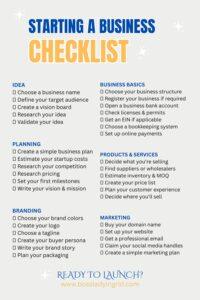
Save this image on your Pinterest board to come back to it later.
How to Create a Simple Business Plan
A business plan doesn’t have to be a huge document that takes weeks to write. When you’re just getting started, you mainly need a clear idea of how your business is going to work.
Think about what you’re selling, who your customer is, how you’ll reach them, and how the business will make money. Then look at your expected costs. What will you need to spend before your first sale, and what expenses will continue every month?
It’s also worth researching your competition and looking at how similar businesses price their products or services. You don’t have to copy anyone. You’re simply gathering information so you can make better decisions.
Then choose a few realistic milestones. Your first goal might simply be getting your website live or making your first sale. You can always set bigger goals later.
You don’t need a five-year plan to get started. You need a direction.
How to Build a Small Business Brand
Your brand is about much more than a logo.
Of course, choosing your colors, fonts, logo, and overall visual style is part of it. But your brand is also the feeling people get when they come across your business.
Think about how you want your business to come across. Friendly and relaxed? Professional and polished? Fun and colorful? Simple and minimal?
Knowing who you’re talking to makes this much easier. Your ideal customer should influence the way you write, the images you use, your colors, and even the way you package an order.
Your brand story matters too. You don’t need a dramatic story or a perfectly polished “founder story.” Just explain why you started and what matters to you.
That personal side can be one of the things that makes a new business memorable.
Small Business Basics You Need to Set Up
Once your idea and plan are becoming clearer, it’s time to take care of the less exciting parts of running a business.
You’ll need to look into the legal structure that’s right for you, whether your business needs to be registered, and whether you need any specific licenses or permits. If you’re in the US, you may also need an EIN depending on your situation.
It’s also a good idea to separate your business finances from your personal finances by opening a business bank account. Choose a bookkeeping system early, even if your business is still small. Keeping track of your income and expenses from the beginning can save you a lot of headaches later.
And don’t forget about payments. Decide how customers will pay you and make sure everything works before you launch.
The exact requirements can vary depending on where you live and what type of business you’re starting, so always check the rules that apply to your particular situation.
How to Decide What to Sell and Where to Sell It
What you’re selling will affect almost every other decision you make.
If you’re creating physical products, you’ll need to think about suppliers, inventory, minimum order quantities, packaging, shipping, and storage. If you’re selling digital products, you may have fewer physical costs, but you’ll still need to decide how customers will receive their purchase.
And if you’re offering a service, you’ll need to think about your packages, pricing, booking process, payment, and customer experience.
Then there’s the question of where you’ll sell.
You could use your own website, a marketplace, social media, or a combination of these. You don’t have to be everywhere from day one.
In fact, trying to be everywhere can quickly become overwhelming.
Choose one or two places where your ideal customers are most likely to find you and learn how to do those well first. You can always expand later.
If you’re still trying to figure out what kind of business could work for you, you might also want to take a look at my 50 Ways to Make Money. Sometimes seeing a few different possibilities is all you need to spark an idea.
How to Start an Online Business and Get Found
If you’re building an online business, your website is only one piece of the puzzle.
You’ll want a domain name that fits your business, a professional email address, and a website where people can clearly understand what you offer and how to buy from you. It’s also worth claiming your business name on the social platforms you may want to use, even if you’re not ready to post everywhere yet.
Then think about how people will actually find you.
That could be through Pinterest, search engines, social media, email, word of mouth, or paid advertising. You don’t need to master every marketing channel before you launch.
If you decide to use Pinterest to bring people to your website, keyword research can make a big difference. I wrote more about this in my guide to Pinterest Keyword Research.
Starting an online business is much easier when you choose a simple marketing strategy and stick with it long enough to see what works.
If you want to go deeper into the actual process of building an online business, you can also read my guide on How To Start An Online Business.
How to Prepare Your Business Before Launch Day
Before you officially launch, take a step back and pretend you’re a customer.
Can you easily find what you’re selling? Are your prices clear? Does your website work properly on your phone? Do all the links work? Can someone actually complete a purchase without getting confused?
This is also the time to check your contact information, shipping or return information if applicable, product photos, payment options, and customer emails.
I highly recommend doing a test purchase yourself. It’s much better to discover a broken link or confusing checkout process before your first real customer does.
I’ve put together this simple pre-launch checklist to help you go through those final details.
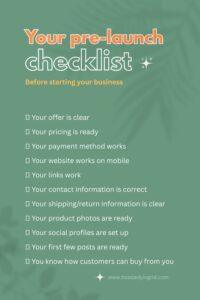
Save the checklist and work through it before you launch. You don’t have to do everything in one afternoon. Give yourself a little time to check each part of the customer experience.
You Don’t Have to Have Everything Perfect Before You Launch
One of the easiest ways to overwhelm yourself when starting a business is to think you need to have everything figured out before you begin.
You don’t.
Your first logo might change. Your website might look completely different a year from now. You may change your products, your prices, your audience, or even the entire direction of your business.
That’s okay.
You don’t need 50 products, thousands of followers, or a perfect five-year business plan to get started. You need an idea you’re willing to test and the willingness to keep learning.
There will always be something else you could improve. At some point, you have to stop preparing and actually put your business out there.
Starting small is still starting.
Ready to Start Your Business?
Starting a business is a lot easier when you stop looking at it as one huge project and break it into smaller steps.
Start with your idea. Make a simple plan. Get the important business basics in place. Create an offer people actually want. Then get your business ready for that first customer.
You won’t know everything when you start, and you don’t need to.
The goal isn’t to build the perfect business before launch day. It’s to build something real, learn from it, and keep moving forward.
And if you’re still looking for Business Ideas For Beginners or simply want a little Small Business Inspiration, don’t feel like you have to find the perfect idea right away.
Sometimes the best next step is simply choosing one idea and seeing where it takes you.
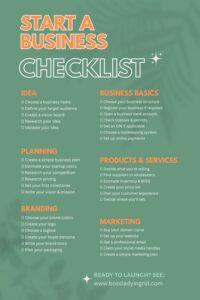
Save this checklist for later, come back to it when you need it, and take it one step at a time.