

Thinking about starting a business, but not sure where to begin? Or maybe you already have one, but it’s not really taking off as you hoped. I get it, it can feel a bit like running on a treadmill and getting nowhere fast.
The truth is, if you’re not clear about what you want to achieve, getting there can be really frustrating. But here’s the good news: starting a business doesn’t have to be overwhelming. In fact, it can be exciting if you know what you’re aiming for.
Disclosure: This post may contain affiliate links, meaning if you decide to purchase via my links, I may earn a commission at no extra cost to you. Please read my disclaimer for more info.
Why Clarity Matters More Than You Think
The key to a successful small business? Clarity. Get clear on what you want to create, what problem you want to solve, and what your goals are. Once you know that, everything else starts falling into place.
And guess what? You don’t need a 50-page business plan to start a small business. What you do need is a clear idea of what you’re going to do and a practical plan for how you’re going to make it happen. Clarity is power!
Also, remember this: in the beginning, you’re experimenting. You’re testing ideas, learning what works, and figuring out what doesn’t. Don’t be afraid to tweak things along the way based on feedback. Think of it like fine-tuning a side hustle; sometimes you have to try a few notes before the song sounds just right.

The 7 questions to ask yourself:
What: What Are You Really Offering?
Let’s start with the basics. What is the core of your business, really? What do you want to offer your ideal customer, and why should they care?
Chances are, your product or service already exists in some form. And that’s totally okay. The magic is in how you do it differently. Maybe it’s your personality, your experience, your story, or the way you explain things. Spoiler alert: your uniqueness is often you and what you bring to the table.
Ask yourself:
- What problem am I solving?
- Why would someone choose me over someone else?
And here’s an important (but sometimes uncomfortable) question: is this something people actually want and are willing to pay for? A great idea is lovely, but a profitable idea is even better, especially if you want to make money online or turn this into a real side hustle.
Practical tip: Try explaining your business idea in one simple sentence. If it feels confusing or messy, that’s a sign you need more clarity. Keep refining until it feels clear and exciting.
Who: Who Do You Want to Help?
Now let’s talk about the people behind your business. Who do you actually want to serve? Are there certain types of people you genuinely enjoy working with? And who do you feel you can help the most?
This is where being specific really pays off. Think about things like age, gender, and income level, but don’t stop there. Go a little deeper. What are their interests? What do they value? What goals are they working toward, and what dreams are quietly sitting in the back of their mind?
The clearer you are about who your ideal client is, the easier it becomes to reach them. Instead of talking to “everyone” (which usually means no one), you can speak directly to the people who need you most.
Understanding your ideal client’s problems, challenges, and needs helps you connect with them in a way that feels natural and genuine. And when people feel seen and understood, they’re far more likely to trust you, and yes, to buy from you.
Practical tip: Imagine one real person you’d love to help. Give them a name. What keeps them up at night? What would make their life easier? Write your content and offers as if you’re talking directly to them.
Where: Where Will You Sell and Deliver?
Next up: where will you actually sell your products or services? This often depends on who you’re selling to and how you can best reach them.
If you’re starting a service-based business or offering consulting, think about how you’ll deliver your work. Will you meet clients face to face, work online, or maybe a mix of both? Virtual services are a great option if you want flexibility (and less time spent commuting).
If you’re selling a product, ask yourself: will it be sold in a physical store, online, or both? Are you focusing on a specific location, or do you want to sell internationally? And yes, dreaming big is allowed here.
It’s also important to think about the costs tied to each option. Some setups require more time, tools, or money than others. Just as important: what feels exciting and aligned with the lifestyle you want to create? Your business should support your life, not take it over.
Practical tip: Choose the simplest option to start. You can always expand later. Starting online or virtually is often the easiest and most affordable way to test your idea.
Why: Why Are You Starting This Business?
This is a big one. And honestly, not a question to rush through.
Running a business takes time, energy, and commitment. If you’re not clear on why you’re starting, it’s going to be very hard to keep going when things get challenging (and yes, they will at some point).
Your “why” doesn’t have to sound impressive. It just has to be real.
Your Personal Why
Maybe you’re passionate about helping people in a specific way. Maybe you’ve found a solution to a problem that no one else seems to address. Or maybe you simply know you can do something better—and you genuinely love doing it.
It could even be that running a business just feels right for you. Whatever it is, make sure your reason goes beyond “I want to make money.” Money is important, but it’s rarely enough to keep you motivated long term.
When you’re not internally inspired, burnout comes quickly. And trust me, people can feel when the passion isn’t there. A business without heart is very hard to sustain.
Why Your Business Matters to Your Clients
Your “why” isn’t just about you. It’s also about your future clients.
Ask yourself: why is what I’m offering valuable to them? What’s in it for them? How will your product or service make their life easier, better, or more enjoyable?
Put yourself in their shoes and be very specific. Write down all the ways your business helps, supports, or solves a problem for them. This clarity will not only help you sell, it will also help you create offers people actually want.
Practical tip: Write your “why” in one short paragraph for yourself and one short paragraph for your clients. Keep it simple and honest. You can always refine it later.
How: How Will People Find You (and Pay You)?
Let’s get practical: how are you actually going to market your products or services?
As much as we’d love to believe that customers will magically show up once we launch… that’s usually not how it works. People need to know you exist, which means you’ll need some kind of marketing plan. Nothing fancy, but just intentional.
How you market your business depends on a few things: what kind of business you’re running, who your ideal clients are, and where your marketing strengths lie. Love writing? Blogging might be your thing. Prefer video or social media? Lean into that. There’s no one-size-fits-all approach here.
Next, ask yourself: where are your ideal clients already hanging out? And how can you reach them in a way that feels natural and aligned with you?
You’ll also want to be clear on how you’re going to get paid. What exactly are you selling? A service, a product, a package, a course? And how will you deliver it, online, one-on-one, via email, or through a platform?
Practical tip: Start simple. Choose one marketing channel and one clear offer. You can always expand later, but clarity and focus will get you results faster.
When: When Will You Start?
So… when is your business actually going to open? “Someday” is not a date. Setting clear goals and timelines gives you something real to work toward.
Starting a business can feel overwhelming, simply because there’s so much to do. And without specific deadlines, it’s very easy for your business to stay an idea instead of becoming a reality. Clarity around when helps you move from dreaming to doing.
Besides choosing a launch date (even a soft one), it’s also smart to think about when you expect your business to start making money. You don’t need an exact number, but having a rough timeline helps you stay focused and motivated.
Practical tip: Pick one realistic start date and write it down. Then work backwards and list the small steps you need to take to get there. Small actions add up faster than you think.
Ready to Turn Your Idea Into Action?
Once you can answer these questions with confidence, you’re in a really good place to move forward. You don’t need everything figured out, just a solid idea, a clear direction, and the willingness to take the next step.
If you’re starting a business or side hustle, working through the questions in this blog already puts you ahead of the game. Seriously. Clarity creates momentum, and momentum creates results.
One more important thing: don’t do this alone. Surround yourself with like-minded people who understand what you’re building and why. Starting a business will challenge you, and sometimes in ways you didn’t expect. Old fears may pop up, self-doubt might get loud, and that’s exactly when having a supportive community makes all the difference.
You’re allowed to build at your own pace. You’re allowed to learn as you go. And you’re definitely allowed to ask for support along the way.
Here’s a small next step to get started today: pick one question from this blog and answer it today, just for yourself. Then take one tiny action that moves you closer to your goal. That’s how real businesses are built.
Make sure to also read:
How to start an online business
How to make money on Pinterest
Check to see if your online business is legal!
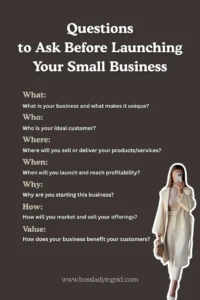
Save this image on Pinterest to come back to this blog later