
I’ve been blogging for years now. But when I first started? I was so excited to finally have my own website that I skipped one very important step… actually figuring out what I was doing.
I didn’t do the research. I didn’t have a real plan. I just jumped in and hoped it would somehow work out.
Spoiler: it didn’t, at least not quickly.
And honestly? That’s completely normal. Whether you’re just starting out or you’ve been blogging for a while, mistakes are part of the process. You’re going to make them. I definitely did, a lot of them.
But here’s the good news: those mistakes are also the fastest way to learn what actually works.
Disclosure: This post may contain affiliate links, meaning if you decide to purchase via my links, I may earn a commission at no extra cost to you. Please read my disclaimer for more info.
Common blogging mistakes, and how to avoid them.
Over the years, I’ve made pretty much every blogging mistake you can think of (let’s call them “learning experiences” to feel better about it). So in this post, I’m sharing 15 of the biggest ones, so you don’t have to learn everything the hard way as I did.
Because here’s the thing most people don’t tell you: Blogging is not a get-rich-quick thing.
It takes time. It takes consistency. And yes, it takes a bit of patience too.
It’s also so much more than just installing WordPress, writing a few posts, and hoping Google magically sends you traffic.
There’s a whole strategy behind it, from choosing the right niche to doing keyword research to actually getting people to find your content.
And the truth? You won’t figure it all out overnight. No one does.
Blogging is one big learning process. You try things, you mess up, you improve, and slowly but surely, things start to click.
So if you’re just getting started, or you feel like you’ve been spinning your wheels a bit… you’re in the right place.
Let’s make sure you don’t make the same mistakes I did!
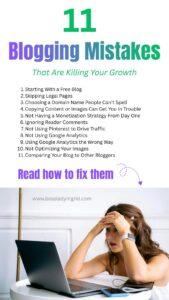
Save this image on Pinterest so you can come back later
1. Starting With a Free Blog
When I first started blogging, I didn’t want to spend any money. I told myself, “Let me see if this even works before I invest in it.” So… I went with a free blog.
And to be fair, that’s not a terrible choice, depending on your goal.
If you’re just blogging for fun, sharing travel stories, or writing for friends and family, a free platform is totally fine. No pressure, no costs, just writing.
But here’s where things started to shift for me…
The moment I wanted to grow, and especially when I started thinking about making money, those free platforms quickly became limiting.
You don’t fully own your site. Your customization options are restricted. And monetizing? That gets tricky fast (especially with ads).
I learned this the hard way.
If you’re serious about blogging — even just a little — it’s honestly so much easier to start the right way from the beginning. It saves you time, frustration, and a full website migration later on (which is not as fun as it sounds).
So here’s my advice: If you see blogging as more than just a hobby, skip the free route and set yourself up properly from day one.
You’ll thank yourself later.
I personally started my blog with Bluehost, and honestly, it made everything a lot easier as a beginner. If you want to check it out, you can get a pretty big discount here.
Fix It: Set Up Your Blog the Right Way From Day One
If you want to take your blog seriously, this is one of the best decisions you can make early on: get your own domain name and invest in proper hosting.
It doesn’t have to be expensive either. A domain name (your unique website URL) usually costs around $10 per year, and hosting can start as low as a few dollars a month.
You also don’t have to buy everything from the same place; just mix and match what works for you.
A lot of bloggers I know started with Bluehost because it’s super beginner-friendly and affordable when you’re just getting started. Another solid option you’ll hear often is SiteGround, especially known for its performance and support.
The most important thing? Just start with a setup that gives you full control and room to grow.
You don’t need anything fancy right now, just something that works and won’t hold you back later.
You’ve got this.
2. Skipping Legal Pages (Yes, You Actually Need Them)
This is one of those things most new bloggers don’t think about… until it’s too late.
I get it — when you’re starting a blog, legal pages are probably the last thing on your mind. You just want to design your site, write your first posts, and hit publish.
But here’s the truth: If you don’t have your legal pages in place, your blog isn’t fully protected.
And that’s not something you want to mess around with.
At the very least, your site should have a privacy policy, a disclaimer, and terms & conditions.
These pages basically explain how your site works, how you handle data, and what people can expect when they visit or use your content.
It might sound a bit boring (okay… it is ), but it’s an important part of treating your blog like a real business from day one.
The good news? Once you set them up, you don’t have to think about them much again.
So before you launch your blog — or if you’ve already started — take a little time to get these pages sorted.
It’s a small step that gives you a lot more peace of mind.
And trust me, future you will be glad you did.
A Safer (and Smarter) Way to Set Up Your Legal Pages
If you’re not sure how to create these pages, be careful with copying templates from other sites or relying on free online generators. They’re often too generic and may not fully protect your blog.
I personally prefer using professionally drafted legal templates created by a lawyer, so everything is set up properly from the start.
If you want an easy option, here’s a Legal Bundle that includes everything you need to get started.
3. Choosing a Domain Name People Can’t Spell (Or Remember)
This was probably one of the biggest blogging mistakes, and you don’t even realize it at first.
Your domain name needs to be simple. Easy to spell. Easy to say out loud. And easy to remember. Because if people have to think about how to type it… they probably won’t.
I ended up rebranding and switching to a much clearer, more straightforward domain name. And while it was 100% the right move, it wasn’t exactly painless.
I had to get help to migrate everything, and my traffic dropped for a while; it took a few months to recover.
So if you’re just starting out, learn from this:
Keep your domain name short, clear, and foolproof.
No weird spellings. No unnecessary words. No explaining required.
Because the easier it is to remember, the easier it is to grow.
4. Copying Content or Images (Yes, Even “Just a Google Image”) Can Get You in Trouble
When you’re new to blogging, it honestly feels like there’s so much to do at once. You’re writing posts, doing keyword research, figuring out design, maybe even thinking about images and videos… it can get overwhelming really fast.
And in that chaos, a lot of new bloggers take shortcuts without realizing the consequences.
One of the biggest ones? Copying content or images from other websites.
Let me be really clear here: don’t do it.
Not blog posts. Not images. Not even “just a picture I found on Google.”
Everything you see online is owned by someone. And using it without permission can lead to serious copyright issues, including takedown requests or, in worst cases, legal claims that can cost you a lot of money.
It’s just not worth the risk.
The good news? You have better (and safer) options
You don’t need to copy anything to make your blog look professional.
For images, you can use free stock photo websites like Canva or platforms like Pexels, where you can legally use high-quality images without stress.
You can also create your own visuals using tools like Ideogram, which makes it super easy to generate unique images for your blog (this is what I use).
There are even more resources out there, but the main rule is simple:
If you didn’t create it, and you don’t have permission, don’t use it.
5. Not Having a Monetization Strategy From Day One
This is one of the biggest mistakes beginner bloggers make.
They start publishing blog post after blog post… without ever thinking about how their blog is actually going to make money.
And then months go by, they earn a few dollars here and there, feel discouraged, and assume blogging “doesn’t work” — so they quit.
But the problem isn’t blogging.
The problem is starting without a strategy.
If you want to build a profitable blog, you need to treat it like a business from the beginning. That means thinking about monetization early, not after the fact.
How Bloggers Actually Make Money
There are a few main ways bloggers earn income:
- Ads (for example, through ad networks like Mediavine or similar platforms, once you have enough traffic)
- Affiliate marketing, where you earn a commission by recommending products or tools you genuinely use (platforms like Amazon Associates are common starting points)
- Digital products, like eBooks, templates, or courses
- Sponsored posts, where brands pay you to feature their product or service
- Freelancing services, if you’re using your blog to showcase skills like writing, VA work, or design
You don’t need to do everything at once. But you do need to choose a direction early on.
Even a simple plan like:
“I’m going to start with affiliate marketing and later add ads or products.”
already puts you ahead of most beginners.
Because when your blog has a clear path to income, you stop guessing… and start building something that can actually grow.
And that’s where things start to get exciting.
6. Ignoring Reader Comments (Big Mistake for Growth)
When I first started blogging, I barely responded to comments… actually, I mostly ignored them completely.
And looking back? That was such a missed opportunity.
It might not seem like a big deal, but if someone takes the time to leave a comment on your blog, they’re basically starting a conversation with you. And if you never reply, there’s really no reason for them to keep engaging.
Why responding to comments actually matters
Replying to comments isn’t just “nice to do”, but it directly helps your blog grow. It builds trust and credibility with your readers, it encourages more people to join the conversation, and it can even improve your content, because readers often add tips, insights, or questions you didn’t think of.
Sometimes the best ideas for future blog posts literally come from the comment section.
It’s a small effort, but it builds real connections, and that’s something algorithms can’t replace.
Think of it less like a task and more like showing up for your readers.
7. Not Using Pinterest to Drive Traffic
This is one of those mistakes that can seriously slow down your blog growth.
Pinterest isn’t just another social media app: it’s actually a search engine where people go to find ideas, inspiration, and solutions. And that makes it perfect for bloggers.
Each pin you create can link directly to your blog post, which means more chances for people to discover your content.
The key is simple: create eye-catching pins and stay consistent.
But don’t worry, you don’t have to be on Pinterest all day.
How to use it without it taking over your life
Tools like Tailwind can schedule your pins for you, so your content keeps getting shared even when you’re not online.
I used to spend way too long designing pins, but once I streamlined my process, everything became faster and easier.
If you’re not using Pinterest yet, you’re missing out on one of the easiest ways to get free, consistent traffic to your blog.
Start simple, stay consistent, and let it grow from there.
If you want to go a step further and actually turn Pinterest into an income stream, I’ve also written a separate post on how to make money with Pinterest, where I break down exactly how bloggers monetize their traffic.
8. Not Using Google Analytics (Because It Feels “Too Technical”)
This is a mistake I see a lot of beginner bloggers make, and I totally get why.
Google Analytics can feel intimidating at first, so most people just… avoid it completely.
But here’s the truth: it’s not nearly as complicated as it looks.
Google Analytics gives you a clear picture of what’s happening on your blog, like:
- who your readers are
- where your traffic is coming from
- which posts are performing best
- what topics your audience actually cares about
Without it, you’re basically blogging blind.
The hidden benefit most beginners miss
If you ever want to monetize your blog with ad networks like Mediavine or similar platforms, you’ll need to meet certain traffic requirements.
And the only way to track that properly is through Google Analytics.
Don’t overthink it or avoid it because it sounds “technical.” Once it’s set up, it actually becomes one of the easiest tools to check and one of the most valuable for growing your blog in the right direction.
Because what gets measured… gets improved.
9. Using Google Analytics the Wrong Way (Obsessing Over the Numbers)
Once you’ve set up Google Analytics, there’s another mistake that can sneak in just as easily as not using it at all: checking it way too often.
I’ve been there.
At first, it’s exciting. You finally see people visiting your blog, and you want to know everything that’s happening. So you refresh your stats again… and again… and again.
But here’s the truth: that habit doesn’t help your blog grow.
Your analytics are useful — they show you what’s working, who your audience is, and how your blog is growing.
But when you’re constantly checking them throughout the day, it starts doing the opposite. Instead of focusing on creating content, you get stuck watching numbers go up and down.
And especially in the beginning, that can be more discouraging than motivating.
A healthier way to do it
Keep it simple:
- Check your stats once a day (at a set time)
- Do a deeper review once a month
- Spend most of your energy on writing and growing your content
That’s it.
Analytics are there to guide your decisions, not take over your focus.
When you stop obsessing over numbers and start focusing on consistent content, that’s usually when real growth starts to happen.
10. Not Optimizing Your Images (Slow Site = Lost Traffic)
This is one of those small blogging mistakes that can have a big impact without you even noticing.
Your website speed actually matters for SEO; faster sites tend to rank better on Google. And here’s the thing most beginners don’t realize: images are usually the biggest reason a blog loads slowly.
Beautiful visuals are important for your blog (especially if you’re using tools like Ideogram or stock photos), but if those images are too large, they can seriously slow your site down.
And when your site is slow, people leave faster… and Google notices that too.
The simple fix
Before uploading any image, always compress it.
You don’t need anything complicated for this. Tools like TinyPNG make it super easy. You just upload your image and download a smaller, optimized version.
You can also use Canva, which automatically optimizes images when you export them (JPG).
Don’t let heavy images slow your blog down.
Fast-loading pages not only improve your user experience, but they also help your content perform better in search results.
Small detail… big difference.
11. Comparing Your Blog to Other Bloggers (The Fastest Way to Lose Motivation)
This is a big one, and honestly, one of the easiest traps to fall into when you start blogging.
You see other bloggers sharing their income reports, their traffic numbers, or their “I made $10K in my first year” posts… and suddenly you start wondering why you’re not there yet.
I’ve done it too.
But here’s the thing: every blogging journey is completely different.
Some bloggers reach $35K a month in a year. Others take several years to get to the same point. And neither of those paths is “wrong” or “better” — they’re just different.
It depends on things like your niche, how you monetize, how consistent you are, your email list, and simply how much time you’re putting in.
Use inspiration, not comparison
Income reports and success stories can actually be really motivating — if you use them the right way.
Instead of thinking “Why am I not there yet?”, try thinking:
“What are they doing that I can learn from?”
That small shift changes everything.
You can learn a lot from successful bloggers: their strategies, their content ideas, even their mistakes. But you don’t need to copy their timeline.
Your blog is not behind. It’s just on its own path.
Focus on your own consistency, your own progress, and your own next step, not someone else’s highlight reel.
Because the truth is: the bloggers you admire today all started exactly where you are right now.
You’re Further Along Than You Think
If you’ve made it this far, first of all: you’re already doing better than most beginners!
Just being aware of these blogging mistakes means you’re not blindly guessing your way through this anymore. You’re learning, adjusting, and actually building something with intention.
And that’s the real difference between bloggers who quit… and bloggers who grow.
Let me be honest with you: you will still make mistakes. I still do too. That’s part of the process. But the goal isn’t to be perfect, it’s to get better, step by step, without overcomplicating things.
Keep it simple. Keep showing up. Keep improving one thing at a time.
You don’t need to have everything figured out today. You just need to take the next right step.
And if you’re here, reading this, learning this, applying this… you’re already on your way.