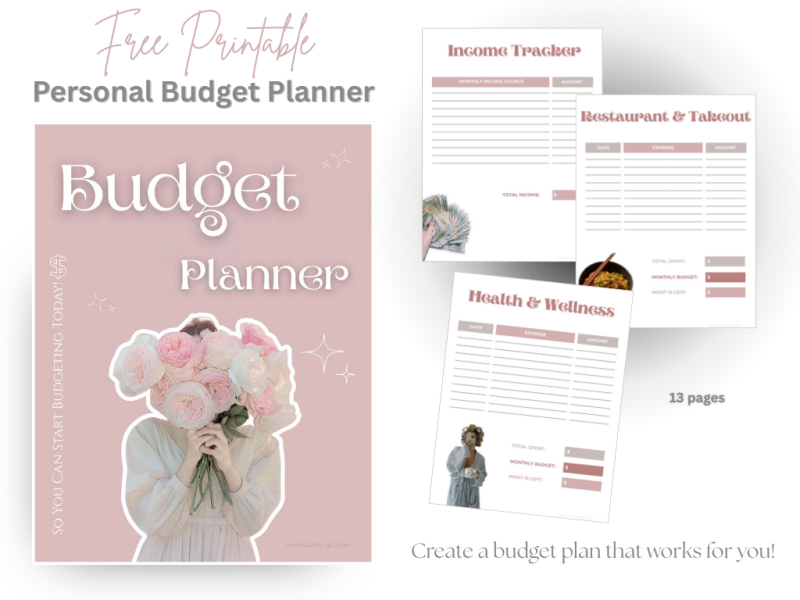

Are you done with money problems and looking for an easy budgeting plan? There is an easy way to plan your spending: the 50-30-20 method!
The Budget 50-30-20 rule can help tackle your debt and get your finances back on track so you can finally stop stressing over money. Understanding your spending can help you better plan for the future. You don’t have to track every single receipt on a spreadsheet or feel bad for enjoying a night out with friends!
Budgets are supposed to HELP you reach your financial goals, not make you feel shameful because you forgot to ask for a receipt from the cashier or the fact that you bought a coffee from Starbucks instead of brewing your own at home.
Disclosure: This post may contain affiliate links, meaning if you decide to purchase via my links, I may earn a commission at no extra cost to you. Please read my disclaimer for more info.

What is the 50/30/20 Rule Budget & How to Use it?
The key to an effective budget is striking a balance between spending and saving without you feeling like you’re being deprived of life. Learning how to create a budget today will save you from financial troubles years down the road.
I know this sounds like common sense, but with so many competing priorities, endless bills to pay, and monthly birthday parties to attend, it’s easy to lose track of where your hard-earned money went. here’s where the 50-30-20 budget rule comes in handy!
Senator Elizabeth Warren and her daughter, Amelia Warren Tyagi, developed this intuitive and simple budgeting system, which you can follow to get your finances in order while still leaving room for enjoying the small things in life.
What is the 50-30-20 budgeting rule?
Simply put: the 50-30-20 rule organizes spending into NEEDS (50%), WANTS (30%), and SAVINGS (20%). This is the reason why it’s so easy to follow, the fact that you only have 3 broad categories to allocate your take-home pay!
This budget is simple and clean. It allows you to focus on the big picture of your finances and avoid the need to track down every dollar of your budget.
- 50% Needs
- 30% Wants
- 20% Savings or debt repayment
By working with only three budget categories, you don’t need to delve into the nitty-gritty details and break down all your spending into different expense categories, such as housing, transportation, food, utilities, and entertainment. You just need to look at the overall categories and not go over the limits.
Tracking expenses and documenting receipts can feel like a tedious task. The last thing you want is to pull your hair out trying to figure out where all your money went! That’s where budgets fail. No one wants budgeting to feel like a lot of work, and I understand that completely!
Now you know how easy this budgeting system is, let’s go over the steps on how you can budget your finances using the 50-30-20 rule.

How to get started with the 50-30-20 budgeting rule
Start by taking a look at your paycheck, and determine your monthly after-tax income (not your gross pay)
Don’t forget to check your payroll deductions. If you have any payroll automatic deductions on your paycheck, such as contributions to your 401(k), IRA, and retirement savings plan, be sure to count these amounts towards “savings” (20%). For Canada, such contributions would include your RRSP, TFSA, and any other accounts.
Deductions for health insurance, life insurance, or short-term & long-term disability deductions for automatic contributions to your 401(k), IRA, or retirement savings plan on your paycheck, be sure to count these amounts towards the “savings” (20%) category, and go towards “needs” (50%).
The savings category also includes money you will need to realize your future goals. Once you know how much money you have to work with, the next step is to create a budget. Let’s take a closer look at each category.
Budget 50% for “Needs”
About half of your monthly income should go toward needs, based on the 50/30/20 rule, and can be used to cover essential expenses that you absolutely need in life to survive and live.
These are expenses that must be met no matter what, such as:
- Utility bills (electricity, water, cellphone, etc.)
- Rent or mortgage payments
- Health care, dental care
- Groceries, food
- Transportation (monthly car payments, car insurance, transit passes, etc.)
- Childcare (Daycare)
Since this category takes up 50% of your monthly budget, it’s very important for you to assess whether something is truly a need or a want.
If you can honestly say, “I can’t live without it,” you have identified a need. Minimum required payments on a credit card or a (student) loan also belong in this category.
Budget 30% for “Wants”
This part of the budget is where you get to have a little fun, like subscribing to a streaming service to watch your favorite show, not because you need the subscription to live. “Wants” are things you enjoy that you spend money on by choice.
Your wants are ‘fun money’ and may include things like:
- Subscriptions (gym membership, Netflix, HBO, etc.)
- Daily coffees or restaurant meals
- Online shopping
- Vacation
- Supplies for hobbies
You have the freedom and flexibility to spend your money on anything you want!
For me personally, I always make room in my budget for my yearly vacation(s) and for lunches with friends, which I enjoy a lot. You may have different things that bring you joy, and everyone is different, so it really depends on how you choose to allocate your own “happy spending.”
As you can see, this is where you’ll need to make difficult choices and decide which items on the list add value to your life and make you happy. The principle to better money management habits is not to save or spend all your money; it’s to be intentional with your money.
And remember, you shouldn’t feel guilty or bad about spending your money on things you’ve budgeted for. That’s because it’s part of the budgeting plan, and we all need to live a little.
Budget 20% for “Savings” and Debt Repayment
The remaining 20% of your budget should go toward the future: savings and paying off your debt. The main reason why you budget is to secure a better financial future for yourself and your family. This is the final piece of the 50/30/20 rule budget that will help you accomplish your goals.
Your savings category could include items such as:
- Savings plans (like an emergency fund, save toward a down payment on a home, an education fund for your kids, etc.)
- Retirement accounts (401(k), IRA, pensions, etc.)
- Debt repayment plan (student loan, car loan, credit card debt). Paying down debt beyond the minimum payment amount belongs in this category, too

Is the 50/30/20 Rule Good for me?
When you’re new to budgeting, the 50-30-20 rule budget is great to follow. It’s easy to understand and use without the detailed expense tracking work. This type of budget is ideal for you if you prefer flexibility over structure.
More importantly, it teaches you the significance of maintaining a balanced lifestyle while you work towards your financial goals. As with any budget, it serves as a baseline to make things simple for you. You can tweak the 50-30-20 rule to meet your specific needs, like starting with 50-40-10.
As you get the hang of budgeting, your budget may shift to 50/35/15. And if you want to be more aggressive with paying down your debt or building your savings, you may adopt a 50/20/30 budget.
Whether you’re looking to get out of debt, stop living paycheck to paycheck, or start saving for your first home, creating a budget that fits your personality makes a world of difference in reaching your financial goals.
Even when you implement this simple method of budgeting, you’re already way ahead of many people who don’t even have a budget!
The Importance of An Emergency Fund
When it comes to savings, you also need to build an emergency fund to cover unexpected events that you can’t plan for. You never know when you’ll be hit with a huge car repair bill, an expensive visit to the veterinarian, or a job loss.
The recommendation is to have at least 3 months’ worth of essential expenses set aside for emergencies. Trust me, having an emergency fund will give you peace of mind and prevent you from getting into sticky debt situations.
Once you’ve built your emergency fund, it’s important to tackle your high-interest debt (credit card debt) right away. The average interest rate credit card companies charge is very high (16.12% as per creditcard.com), so you need to make it a priority to kill off your credit card debt as soon as possible.
If your employer has a 401(k) match, you should always contribute enough to your 401(k) account to get the maximum match offered by your employer. This is literally free money that you’ll be leaving on the table if you don’t take advantage of it!
Saving money is not easy, but it’s so worth it when you become debt-free and can finally stop living paycheck to paycheck!

How to make more money
Sometimes, no matter how hard you try to budget, there’s just not enough money to work with. In these circumstances, you’ll need to be creative and find ways to make extra money.
You can start a clothing brand or start a blog as hobbies to earn extra money outside your full-time job, just like I did. Today, I’m earning a nice income from my side hustles, so I can now work part-time for a boss and work part-time for myself. I love the freedom that comes with it! No more 9-5 for me, thanks to my side hustles.
Earning extra money allowed me to increase my budget so I could save more and spend more on things that I love and are valuable to me. I blog about all that I’ve tried and am still doing to make extra money from home. Feel free to read all my blogs.
My goal is to help you ditch debt, build a healthy savings fund, and invest for your future, so you can finally reach financial independence! I really want to see you get out of debt and save your first $10,000, $20,000, $50,000, or even $100,000!
I hope you found this article helpful and it answers your questions on how the 50/30/20 rule budget works! Which budgeting method do you personally use to manage your daily finances? Let me know in the comments below!