
Budgeting for beginners. Budgets are a way to manage your money better. It can be very helpful to have a personal budget, but where to start?
Well, creating an effective and simple budget plan allows you to take control of your finances.
Learn how to make a budget plan and how you can start budgeting your finances.
Disclosure: This post may contain affiliate links, meaning if you decide to purchase via my links, I may earn a commission at no extra cost to you. Please read my disclaimer for more info.
Budgeting For Beginners: How To Make a Budget Plan
Did you know that around three-quarters (74%) of Americans have a monthly budget, and 84% of Americans with a monthly budget say they’ve sometimes exceeded their budget?
So, despite the high number of budgeting, many still overspend. Creating your budget plan should be easy and doable. If your budget plan is overly complicated, it’s guaranteed to fail.
Before you master your budget plan, you can also learn more about Free Budget Template and Tips For Beginners to help you track your income, with all your expenses in organized categories.
These sheets have helped me get into the groove of saving money and building good, long-term habits for over a decade.
Get your free budget planner here
How to create a budget plan
Firstly, it’s better to avoid bad budgets that are restrictive and make you feel guilty for spending. These kinds of budgets are ineffective and often lead to budget burnout.
When you are creating a budget plan, remember that a budget is designed to serve you, and your personal budget should be flexible and fit your lifestyle.
It doesn’t matter if you prefer the paper and pen method, using a pretty printable budget planner like this, or creating a budget spreadsheet in Excel.
Either way, making your budget gives you insights into where your money is going, so you can make better financial decisions and reach your financial goals.
Here are 5 simple steps to creating a budget that you can stick to, so you can master your budgeting finances.
Step 1: Set your goals before creating a budget plan
Oftentimes, budgets fail because we don’t know why we’re doing it. We’re just doing something without a strategy. So, before you even begin creating your budget plan, you first have to figure out what you want to achieve with it.
For you to succeed, you need to ask yourself: What are my short-term and long-term financial goals? Am I tired of living paycheck-to-paycheck and want to get out of this deadly cycle? Or am I making this budget to pay off my debts and get my life back on track?
Your goals can be as simple as saving up for a vacation with your friends or as crucial as building an emergency fund. Goals don’t have to be big.
Regardless of how big or small your goals are, you need to constantly remind yourself of them. It’s best to write them down, tell someone, or set reminders on your phone.
Don’t forget that having a realistic goal means you’ll be more motivated to work towards it. We don’t realize it, but setting a motivation or goal has stronger psychological effects than we think.
Step 2: Choose a budget type that fits your personality
Most of us see budgeting as restricting ourselves, so, from what I’ve learned, budgeting isn’t easy.
It’s like going on a diet you just can’t stick to; it’s hard to resist good food. Similarly, with budgeting, it’s hard to stop spending on things that bring us joy. For me, that’s traveling to Asia and anything that’s good for my health, like expensive supplements.
Budgeting is about finding the right method that we actually like and don’t make us feel deprived, just like dieting and finding healthy recipes that still taste good.
That’s why budgeting is about choosing a style that fits your personality; you can customize it to what works for you.
Here are a few budgeting methods to choose from:
Zero-Based Budgeting
The principle of the zero-based budget is to put all of your hard-earned money to work. Zero-based budgeting means every dollar you spend has a predetermined use or meaning that you plan ahead of time, like to put food on the table, pay off debt, build an emergency fund, etc.
By following this approach to budgeting, your income needs to match your expenses and savings by the time you’re done with your budget. When you assign all your money to a job with a budget template, you’re being intentional with your money.
The zero-based budget is best suited for people who like to plan ahead, don’t mind tracking their expenses, and want full control of their money.
Envelope Budgeting
The envelope budgeting system is a cash-only system and has been around for a long time. It’s simple but powerful. The envelope system is a hands-on system where you take out your paychecks in cash, then physically divide up the money into different envelopes.
To start, you’ll need to write down your budget categories — groceries, clothing, your car, etc. — onto separate envelopes and stuff them with cash. The amount of money you put into each envelope is your monthly budget and spending limit for each category. With this system, you use hard cash to pay for things.
This way, you’ll need to take cash from the envelopes to pay for things. Once an envelope runs out of cash, that’s it, no more spending in that category for the rest of the month.
The idea behind this system is to get you back in touch with your money. The envelope system is old school, but it works.
You can also do this in a more modern way, digitally, by using different bank accounts (and bank cards!) for each budget category. This works too! Divide your income among the bank accounts and use the card that fits the budget category.
Perfect for you if you lack the discipline to stick to a budget and want to curb your spending.
50/30/20 Rule Budgeting
What’s the point of saving money if you don’t get to live a little? This is where the 50/30/20 budget comes in and saves the day! The philosophy behind the 50/30/20 budget is balancing your needs, wants, and savings
The way it works is very straightforward. The 50-30-20 rule recommends putting 50% of your money toward NEEDS, 30% toward WANTS, and 20% toward SAVINGS. The savings category also includes money you will need to realize your future goals.
50% of your paycheck is allocated to take care of needs like housing, food, transportation, and health insurance.
30% of your income goes to wants, such as dining out with friends, service subscriptions, and entertainment.
20% of your paycheck is dedicated to savings and paying off debt. This includes building an emergency fund, contributing to your 401(k) plan, and debt repayment.
The 50-30-20 budget is ideal for people who prefer simplicity and a balanced approach to budgeting. Ready to learn more about this budgeting rule? Then miss this article: What is the 50/30/20 Rule Budget & How to Use it?
Reverse Budgeting
Lastly, my favorite budgeting method, because, in my opinion, it doesn’t feel like I’m budgeting. As Warren Buffett puts it: “Do not save what is left after spending, but spend what is left after saving.”
Traditional budgeting is to save the remainder of your paycheck after paying your living expenses. But for most people, the reality is that after all your bills and expenses are paid, you’re left with nothing.
The reverse budget system turns your finances around by focusing on this concept: pay yourself first. This budgeting method “reverses” the budgeting process by prioritizing savings over expenses.
When you receive your regular paychecks, the first thing you need to do is take care of yourself by saving a portion of that money. After you’ve set aside money to meet your monthly savings goals, you move on to pay your living expenses.
This way, you won’t be the last person in line, thinking there will be money left over for you, because that’s wishful thinking. This type of budget works best for people who find it challenging to save money at the end of the month. It is also perfect for those who prefer to save first before spending.

Step 3: Add up your after-tax income
With this budgeting plan, you add up all the money you and your spouse receive from full-time or part-time work, government benefits, side hustles, etc. Look for your after-tax income, not the gross income. For those of you who receive steady bi-weekly paychecks, your monthly take-home pay is your after-tax income.
Many employers have 401(k) matching programs where they will match your contribution to your 401(k) account. Make sure you contribute enough to get the full match from your employer. This is one of the easiest ways to get free money, and you can’t afford to miss out on it.
When you contribute a portion of your salary, via deductions, to your 401(k) account, count it towards your savings goal. Now, if your monthly income fluctuates, you can take the average after-tax income of your last 6-12 months as your starting point.
Do you earn extra income on the side by doing freelance work? Include that as part of your total income. Needless to say, finding ways to make extra money can help tremendously and give you more flexibility with your budget.
How to earn more money as a beginner
One of my top recommendations and favorite ways to earn extra income is starting a side hustle, a business, or a blog.
Several years ago, I started a business and a blog as a fun hobby while working my everyday 9-5 job. I was looking for ways to improve my financial situation, and starting this blog allowed me to document my financial journey while learning how to earn extra money online.
To learn more, you can visit my step-by-step article on how to start a business and this tutorial on how to start a blog for beginners. I went from earning an extra $100+ per month to turning it into a chance to work part-time for a boss, and part-time for myself.
The extra money definitely gave me more flexibility and allowed me to stretch my budget on things that matter to me, like vacation and dining out with friends at my favorite restaurants.
Step 4: List all your expenses
Do you know where your money went? Your bank account is like the Bermuda Triangle; it’s where money goes in and disappears without explanation. It’s one of life’s greatest mysteries. Now it’s time to bust this mystery once and for all!
It’s actually very easy: you’re going to review your past transactions from the previous months to see where your money actually went.
Download your bank and credit card statements for the last three months, then categorize all your expenses: housing, utilities, groceries, transportation, entertainment, and so on.
Don’t forget those easy-to-miss cash purchases for coffee and snacks, and make sure to include them in your budget.
This is the perfect opportunity to categorize your spending between needs, wants, and savings to see how close or far you are from the 50/30/20 budget. It’s also the perfect opportunity to see what unnecessary things you’re spending on.
The hardest part is not to make excuses to justify your overspending, but also not to be too harsh on yourself. Take a moment to reflect on your spending habits and commit to making changes.
Checking your expenses is often a reality check for many people because most of us don’t know exactly how much we spend on necessities, nice-to-haves, and savings, if any. But this is why you’re making a budget: to improve your financial situation.
Step 5: Let's review and make adjustments
Remember, budgeting isn’t a one-time thing that you just do over and over again. It’s a continuous process that you have to regularly monitor and adjust for it to be effective.
If you create a budget once, but don’t bother reviewing and adjusting it, you’re missing out on the most crucial aspects of budgeting, and that’s accountability and tracking.
A budgeting plan will be effective if you can review it at least weekly. Depending on your situation and goals, you’ll have to make the necessary adjustments. It’s best to do this every week until you get the hang of budgeting.
Once you get the hang of it, you can revisit your budget every month and make small changes until it becomes easy.
The reason why it’s so important to constantly update and adjust is that life is unpredictable. Your financial situation can change in an instant, so you have to be able to adapt to these changes to stay on track toward your goals.
After all, you never know when your car might need repairing or when your best friend suddenly wants to get married next month! let’s be honest, if you want to keep both the car and your best friend, you’ll have to be flexible with your budget 😉
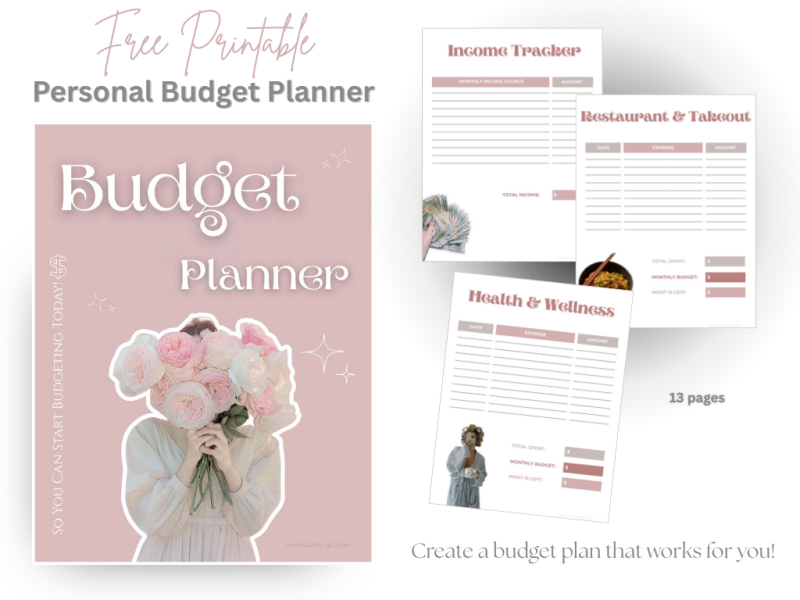
How to create a budget plan for beginners with free printables
When you are new to budgeting, you might need a little more help to start. While I was searching for the best frugal living tips to help with my savings goals, I also created a set of budget printable templates that are easy to use.
I’m happy to share this printable budget planner with you, so you can start building a better relationship with your money, too! These are the templates I used to help manage my income streams and save money. Don’t wait, and go check it out! It’s free.
Final tips on how to create a budget
When they say the first step is the hardest, I’ll have to agree with that. Learning how to create a budget is the hardest step to gaining control of your finances, but it’s the step you need to take now.
This is the way to set a clear boundary between your needs and wants and adjust your budget accordingly. Remember that you should set your boundaries since what works for others may not work for you.
Don’t let others dictate what you should and shouldn’t spend on, since your budget is tailored to your circumstances. It’s very personal.
At the end of the day, as long as you’re able to save and plan for the future while doing what makes you happy, you’re winning! Good luck, and let me know how it’s going in the comments below.